
Moving enterprise workloads to the cloud isn’t a simple task that you can transfer. Legacy systems are deeply embedded; regulatory requirements are rigid, and downtime is not an option. Choosing the wrong cloud migration partner can be very costly.
This guide explores leading cloud migration solutions for enterprises. We’ll cover their features, pricing, and ideal use cases.
Why Is Enterprise Cloud Migration Different?
Cloud migration implementation services for enterprises aren’t the same as spinning up a startup on AWS. You’re managing legacy systems, sensitive data, and global teams. The complexity goes far beyond a simple migration.
The stakes are high. A successful cloud migration can reduce infrastructure costs by 30 to 40%.
It also enhances software delivery. Poorly planned cloud migration causes outages, data loss, and budget overruns. The best cloud migration partners combine expertise with proven processes. They also provide support throughout the transfer process.
What to Look for in Cloud Migration Solutions?
Before comparing platforms, focus on the factors that matter most. These criteria help evaluate enterprise cloud solutions effectively.
- Assessment and discovery tools that map your existing infrastructure automatically.
- Migration automation to reduce manual errors during data migration.
- Support for legacy systems, which include on-premises databases and older application stacks.
- Compliance and security controls for industries such as finance, healthcare, and government.
- Post-migration tracking so you do not fall behind after go-live.
- Upfront pricing with no surprise fees mid-project.
Top Cloud Migration Platforms for Large Organizations
Aiimone
Aiimone offers cloud migration and digital transformation services built around enterprise architecture needs. This process reduces transfer risk through structured planning and staged implementation.
Best for: Medium-to-large enterprises seeking practical migration guidance.
Key features: Assesses cloud readiness and application portfolios. Supports transfer planning and modernization strategies.
Verdict: Worth evaluating if you want a dedicated migration partner that treats your project as more than a ticket in a queue.
AWS Migration Hub
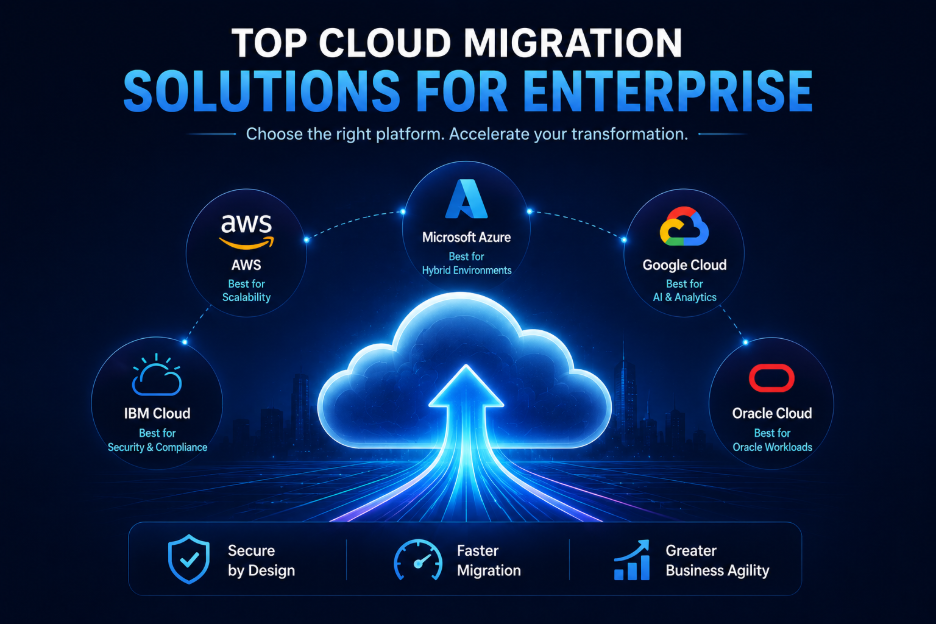
AWS Migration Hub provides a holistic view of application transfer. This hub tracks progress across AWS and partner tools. It incorporates AWS Application Discovery Service. This process helps map servers and dependencies before migration.
Best for:
Organizations already invested in the AWS ecosystem.
Key features:
Automated discovery and transfer tracking. Supports third-party integrations and legacy app modernization.
Pricing:
The hub is free. You pay for the fundamental AWS services and any partner tools you use. Enterprise support plans start at 10 percent of monthly usage.
Verdict:
Perfect choice if your destination is AWS and you want visibility across an immense portfolio of tasks.
Google Cloud Migrate
Google Cloud Migrate moves digital machines to Google Cloud. It supports transfer from on-premises and other cloud environments. It’s designed to move tasks with minimal disruption and includes built-in testing capabilities.
Best for:
Enterprises modernizing VMware-based infrastructure.
Key features:
Supports live transfer with minimal downtime. Includes streamlined recommendations and hybrid cloud support.
Pricing:
Migration tooling is included with Google Cloud usage. Full enterprise contracts are negotiated based on the size of tasks.
Verdict:
Strong for VM-heavy environments. Less detailed for complex application modernization compared to some competitors.
Microsoft Azure Migrate
Azure Migrate is Microsoft’s specialized hub for cloud services. The platform helps assess, transfer, and streamline tasks. This platform includes servers, databases, applications, and virtual desktops.
Best for:
Organizations running Microsoft-heavy stacks such as Windows Server, SQL Server, and Active Directory.
Key features:
Offers transfer assessments, database migration, and Azure Arc. Plus, built-in cost estimation capabilities.
Pricing:
Azure Migrate tools are free. You pay for Azure infrastructure and any premium support tiers. Enterprise agreements can reduce costs significantly.
Verdict:
The natural choice for Microsoft shops. The tooling is mature, and the integration with current Microsoft environments is tight.
IBM Cloud Migration Services
IBM brings deep expertise in cloud migration solutions for legacy system modernization, especially in mainframe and COBOL environments where other providers face problems. Their services cover strategy, structure, and practical implementation.
Best for:
Large enterprises with complex legacy systems, regulated industries.
Key features:
Mainframe modernization, AI-assisted migration planning, hybrid cloud infrastructure, and strong compliance support.
Pricing:
Custom enterprise pricing. Engagements typically start in the six-figure range depending on the scope.
Verdict:
If you have older systems that need careful handling, IBM’s track record here is hard to match.
Enterprise Cloud Migration Pricing and What to Expect?
Costs vary widely, but here’s a general picture:
DIY migration with AWS, Azure, or Google reduces tool costs. But increases demand on internal teams.
Perfect for teams with good cloud skills.
Managed migration services (IBM, Aiimone, Accenture):
Higher upfront cost, lower internal workload. These services are better for large-scale migrations.
Hybrid approach:
Handle standard workloads with indigenous cloud tools. Use experts for legacy modernization projects.
Enterprise cloud migration costs typically range from $500,000 to several million dollars.
How Enterprises Choose the Right Cloud Migration Partner?
The decision usually comes down to three things:
Where are your workloads going? If you’re committed to one cloud provider, their built-in utilities are usually the starting point.
How complex is your legacy environment? Older systems need specialists. You do not assume a self-service tool can handle decades of technical debt.
How much internal capacity do you have? If your IT team is stretched, a managed service provider makes more sense than a DIY approach.
Final Remarks
In conclusion, cloud migration solutions are one of the biggest structural decisions an enterprise will make. If you get it right, you unlock speed, flexibility, and real cost savings. If you get it wrong, you’re dealing with budget issues and frustrated teams.
The good news is that the tools and expertise exist to do this well. The appropriate migration choice is about finding a solution that matches your structure and goals.
Start with a solid assessment. Understand what you have before you move anything. Build a phased plan that accounts for risk. And make sure whoever you partner with has done this before on your scale.