Legacy systems used to be a quiet problem. You kept them running and repaired them when issues arose. That’s no longer the case. In 2026, the old structure is the single biggest thing holding companies back, especially when it comes to using AI.
The shift has been sharp. The question inside most boardrooms is no longer, should we modernize? The answer is that we need to modernize so we can do AI. That pressure has made app modernization services one of the most important investments an enterprise can make this year.
This guide walks through what’s changed, why it matters, and the 10 large companies across the USA, the UK, and the UAE that are trusting us with their modernization work in 2026. You’ll also find clear answers to the questions decision-makers ask most.
Why App Modernization Matters More Than Ever in 2026?
A few years ago, moving to the cloud was the goal. Now it’s just the starting line. Cloud-native benefits like speed and lower costs are now basic expectations. AWS defines modernization as upgrading applications to fully use cloud-native architecture.
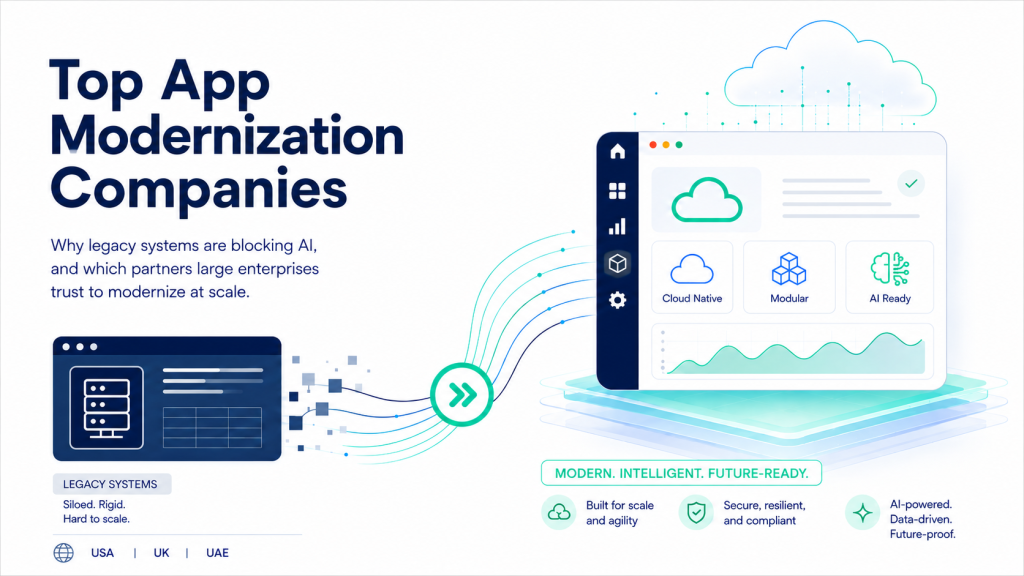
What has changed, AI? Legacy systems weren’t built for AI integration. These systems lack the APIs, live data access, and modular setup needed for AI integration. So, companies are modernizing specifically to remove those hurdles.
The numbers back this up: McKinsey’s 2025 State of AI survey found the technology sector had already passed 90% AI use, and AI is now used to improve the modernization process itself by analyzing old code, mapping data flows, and suggesting how to refactor.
Legacy apps are expensive to maintain and harder to secure. Every month spent propping up an outdated system is a month your competitors spend building something better. Cloud application modernization fixes that break single-tier apps into smaller pieces, which are cheaper to run and faster to modify.
The Big Trends Shaping Modernization This Year
Before the company list, here’s what’s actually driving the work in 2026. These trends should shape how you pick a partner.
AI readiness is the new bar
It’s not enough to be on the cloud. AI readiness needs live data streams instead of batch processing, data made accessible through APIs rather than locked in monolithic databases, and a modular setup that AI components can plug into.
Incremental beats big bang
Rewriting everything at once has a long record of failure, so the strangler pattern, where features are replaced one by one until the old system can be switched off, is now the dominant enterprise approach. It’s slower per piece but far safer across a whole program.
Low code is closing the skills gap
Around 70% of new applications are expected to use low-code or no-code tools in 2026, letting teams build integration layers between legacy apps and modern cloud services without waiting on scarce developers.
ROI is back in focus
Tighter budgets are moving teams toward demonstrable returns and a factory approach that makes modernization systematic rather than a rushed effort. Firms that modernize are more likely to see meaningful returns from AI because their systems can finally support machine learning and automation workloads.
Top 10 App Modernization Services Companies Enterprises Trust in 2026
The list below reflects the firms that large businesses turn to for serious digital transformation services. We’ve grouped them by the kind of work they do best, so you can match a partner to your situation.
Accenture
The default choice for very large, difficult programs. Accenture combines deep industry knowledge with the extent to run modernization across thousands of applications at once. Best for global enterprises that need a single partner to handle strategy, transfer, and change management together.
Deloitte
Strong on the business side of transformation. Deloitte is a good fit when modernization is tied to regulatory needs, risk, or a broader operating model to change. Popular with financial services and government clients across the UK and UAE.
IBM Consulting
IBM brings hybrid cloud expertise and a focus on cloud native architecture. Its mix of consulting and its own cloud and AI tooling makes it a fit for enterprises that want to help move regulated workloads without losing control of governance.
Infosys
A leader in cloud migration at scale, with developed delivery centers and competitive pricing. Infosys works well for enterprises that want predictable, repeatable modernization across a large portfolio rather than a few flagship apps.
Tata Consultancy Services (TCS)
TCS pairs broad engineering capacity with strong enterprise workflow automation practices. It’s a reliable choice for companies that need to modernize core operational systems while keeping the business running day to day.
Capgemini
Capgemini has a good reputation in cloud infrastructure and platform engineering. It tends to do well with manufacturing, retail, and energy clients in Europe and the Middle East that want a partner comfortable with both legacy estates and new builds.
Cognizant
Known for application services and a practical, delivery-focused style. Cognizant is a good app modernization consulting partner for medium to larger enterprises that want hands-on engineering. This app modernization partner supports rather than a top-heavy strategy deck.
Wipro
Wipro blends modernization with managed services, so it suits enterprises that want one partner to modernize an app and then run it afterward. Strong presence across the US, UK, and Gulf markets.
EPAM Systems
EPAM is an engineering-first firm that’s a favorite for complex, custom modernization work. If your apps are unusual or your requirements don’t fit a template, EPAM’s product-engineering depth is a real advantage.
Aiimone
Aiimone focuses on using AI to speed up the early stages of modernization, like reading old code, mapping dependencies, and planning a safe transfer path. It’s a fit for enterprises that want an automation-heavy approach rather than a large traditional team.
How to Choose the Right Modernization Partner?
The best company depends entirely on your situation. A few honest pointers:
A 50,000-employee bank and a 500-person logistics firm don’t need the same partner. The big consultancies succeed on huge programs but can feel heavy and costly for smaller assets. This disadvantage can be where firms offering more affordable app modernization services for enterprises make more sense.
Ask about their AI approach:
Any credible partner in 2026 should explain how they use AI to analyze your code and reduce risk. The smart ones use AI-assisted workflows to speed up analysis while keeping human judgment in the loop, rather than handing everything to automation.
Ask for case studies in your industry and your region:
Modernization in a UK insurer is not the same as in a UAE telecom. Real examples beat sales claims every time.
Favor incremental plans:
If a partner pitches a single massive cutover, be careful. The safer path is replacing pieces gradually so you transfer value along the way.
How Long Does Enterprise App Modernization Take?
The honest answer is that it depends on the scope. A single application can be modernized in a few weeks to a few months. A full enterprise application transformation across a large portfolio is usually a multi-year program, run in stages rather than all at once.
The progressive approach most firms now use means you don’t wait years for results. You get working improvements every few months while the bigger program continues in the background. That consistent delivery is the clearest benefit of application modernization, and a big reason boards now treat it as ongoing work rather than a one-time fix.
Final Remarks
In conclusion, legacy systems block AI, raise costs, and widen the gap between you and faster competitors. Your focus should be on app modernization services, and proper research is required to choose the most appropriate one. The companies on this list, from global names like Accenture and Deloitte to engineering-led firms, provide a path forward.
The right move is to be clear about your budget and your AI goals. You can then pick a partner who can prove they’ve done it before. Start small, ship value early, and build toward a system that’s ready for whatever comes next.