Healthcare is facing issues in various areas. The problems facing many healthcare organizations include rising patient demand, systems that are slow, and limited access in many regions. Nowadays, healthcare organizations must deal with higher expectations. People prefer quick service, clear communication, and care that meets their daily life requirements.
Digital health solutions have become a savior in such situations. These health solutions are not just tools and are modifying how healthcare performs at its core. From remote consultations to live monitoring, these solutions are helping create a system that is more connected, efficient, and patient-focused. Let’s discuss smart healthcare technology and its benefits for healthcare organizations in this blog.
What Are Digital Health Solutions?
Digital health solutions for healthcare organizations are technologies used to deliver, manage, and improve healthcare services through digital platforms.
They include:
• Shifa One
• Telemedicine platforms
• Electronic health records
• Mobile health apps
• Wearable devices
• AI-driven diagnostics
• Remote patient monitoring systems
Healthcare providers collect, store, and use data properly using these tools. These tools result in appropriate decisions and more efficient care.
Challenges and Considerations
Despite the benefits, some challenges need attention.
• Data privacy and security risks
• High setup and implementation costs
• Need for staff training
• Limited access to digital tools in some regions
Directives such as HIPAA set standards for safeguarding patient data, but proper implementation is still essential.
How is Digital Health Transforming Healthcare Systems?
Smart digital healthcare systems help solve these problems by improving the flow of information between patients and providers.
They make it possible to:
• Access care without physical visits
• Instantly share patient data
• Improve diagnosis and treatment speed
• Support continuous patient monitoring
Top Digital Healthcare Platforms for Patients
Shifa One
The most important developments in digital health solutions are the rise of personal health platforms that give individuals more control over their medical information. Patients can now manage their health information in one connected system instead of depending only on hospitals and clinics.
An example is Shifa One, a platform designed to simplify the process of storing, accessing, and understanding patients’ medical records.
How does ShifaOne improve the healthcare experience?
• Centralized storage of medical records
• Easy access through mobile and web devices
• Clear summaries of complex health data
• Live health monitoring of history
• Instant sharing of records with doctors
In real-world situations, patients often struggle to provide proper records of their medical data. Various companies such as Aimone provide Platforms like Shifa One that solve this by keeping everything organized and instantly accessible.
Telemedicine and Virtual Care
Telemedicine allows patients to communicate with healthcare professionals through video calls or apps. The use of this platform reduces travel, saves time, and improves access for people in remote areas.
Real-World Examples
During the COVID-19 pandemic, hospitals and clinics worldwide increasingly adopted telemedicine to continue patient care. Many providers used online consultations to reduce visits. Despite this process, patients still managed routine checkups and follow-ups. This process helped maintain healthcare access during complexity.
Electronic Health Records (EHR)
Electronic health records store patient information in digital form. Doctors can instantly access medical history and prescriptions. This process improves accuracy and coordination.
Real-World Examples
Many hospitals use electronic health record systems to concentrate on patient data. For example, large healthcare networks in the United States use Electronic Health Record systems to allow doctors, labs, and specialists to access the same patient information instantly. This process improves coordination across departments.
Remote Patient Monitoring
Portable technology and sensors live-track patient health. This platform is useful for managing chronic conditions.
Real World Examples
Remote patient monitoring is used for long-term health conditions. Patients with conditions like diabetes use portable technology to track their health. Doctors receive live updates and can respond if any issues arise. This process reduces hospital admissions.
Mobile Health Applications
Mobile apps allow patients to handle appointments, medications, and health data. This application encourages active participation in personal health management.
Real World Examples
Mobile health apps such as MyFitnessPal and Apple Health help users track physical activity, diet, and health data. These apps encourage people to regularly monitor their health.
AI and Data-Driven Healthcare
Artificial Intelligence analyzes great volumes of medical data. This digital system supports early disease detection, improves diagnostic accuracy, and assists doctors in making informed decisions.
Real World Examples
AI is already being used in medical imaging. For example, AI systems can examine X-rays and scans to determine diseases such as cancer at an early stage. This process helps doctors through accuracy and boosts the diagnosis process.
Benefits of Digital Health Solutions in Healthcare
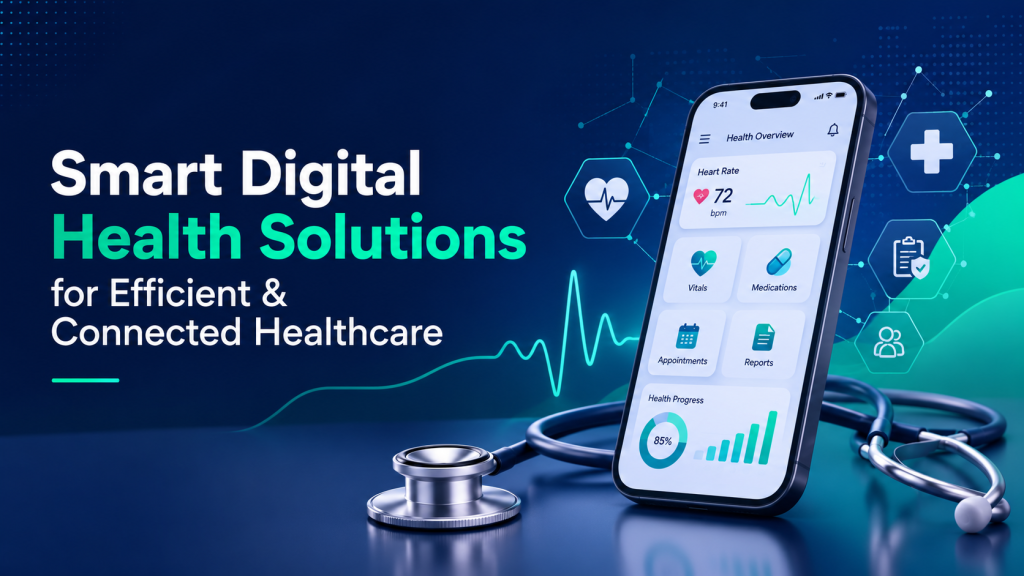
The following benefits of health tech solutions are for both patients and healthcare providers. Let’s take a look at these benefits.
For Patients
• Faster access to healthcare services
• Reduced waiting time
• Better tracking of health conditions
• Improved communication with doctors
For Healthcare Providers
• Streamlined workflows
• Accurate data management
• Reduced paperwork
• Better use of resources
Overall, digital health solutions create a more efficient and responsive healthcare system.
The Future of Connected Healthcare Systems
Digital health is still evolving. As technology improves, healthcare systems will become more integrated and personalized. Most healthcare organizations use patient care technology to keep track of their patient’s data and provide diagnoses for their patients.
We can expect:
• Wider adoption of AI-based diagnostics
• More advanced wearable devices
• Expansion of telehealth services
• Better integration between healthcare systems
The focus will shift from treating illness to managing health continuously.
Final Remarks
In conclusion, digital health solutions create an efficient healthcare system. This platform reduces inadequacies and enhances decision-making. This process has now become flexible and easier for providers to manage through digital tools. Healthcare providers are better prepared to tackle various challenges when adopting these solutions. These digital tools result in providers’ quick response to patient needs. These tools also help providers manage data more effectively and provide care that meets people’s daily lives. Professionals with digital skills play an important role in making healthcare more reliable.