
In the current world, most businesses prefer maintaining inventory using modern technology. Keeping track of stock, orders, and supply chains can quickly become complex if not properly dealt with. Manual processes often lead to errors and lost revenue.
This is where inventory management software solutions have a great impact. These tools help businesses monitor stock and improve efficiency. This blog explores the best stock management software solutions for businesses of all sizes. We will also discuss key benefits and use cases for stock management software.
What Is Inventory Management Software?
Inventory Management Software solutions are digital systems that help businesses monitor and control their inventory. This software tracks products from purchase to sale and ensures that accurate stock levels are kept.
These systems typically include:
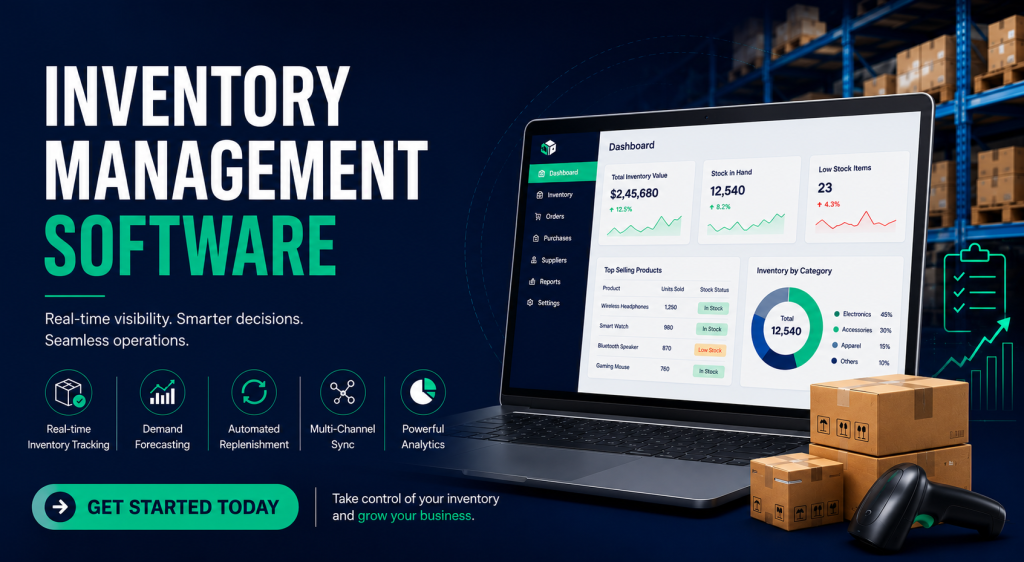
- Live inventory tracking
- Order and supply chain management
- Stock alerts and replenishment
- Reporting and analytics
- Incorporation with sales and accounting systems
Businesses can make better decisions by using these tools.
Why Do Businesses Need Inventory Management Software?
Many businesses struggle with:
- Overstocking or stock shortages
- Manual tracking errors
- Lack of clarity across locations
- Delayed order fulfillment
Inventory management software solves these issues by providing clarity into stock movement and demand patterns.
For example, a retail business can use retail inventory management software to track which products sell quickly and adjust purchasing decisions accordingly.
Challenges and Considerations
Despite the benefits, there are some challenges for stock management software to consider:
- Initial setup costs
- Training requirements for staff
- Integration with existing systems
- Data migration from manual processes
Top Inventory Management Software Solutions 2026
Inventory management software is not just about tracking products. This software improves overall business performance. Various inventory forecasting tools can be used by businesses. Different companies such as Aiimone provide stock management software solutions to different clients.
Businesses can:
- Reduce stockouts and overstocking
- Improve order accuracy
- Save time through automation
- Make data-driven decisions
- Enhance customer satisfaction
For example, an eCommerce company can automatically update stock levels across multiple platforms, reducing the risk of overselling.
Best Inventory Management Software Solutions
Various inventory optimization solutions can help businesses to perform their tasks more effectively. Here are some used inventory management platforms that support both small and large businesses:
OrderOne
OrderOne is an AI-powered inventory and commerce management platform designed to bring live clarity and control across the entire supply chain. This platform connects orders, inventory, suppliers, and forecasting into one unique system.
OrderOne focuses on initiative inventory management. This platform helps businesses fulfill demand, prevent stock issues, and streamline operations.
Key Strengths
- Live inventory monitoring across locations
- AI-driven demand forecasting
- Automated stock replenishment
- End-to-end order lifecycle management
- Reduced manual errors through automation
Practical Use Case
For example, an eCommerce business managing various warehouses can use OrderOne to track stock levels, determine demand trends, and activate restocking before shortages occur. This process reduces stockouts and ensures smooth order fulfillment.
Best For:
- Growing eCommerce businesses
- Companies managing multi-location inventory
- Businesses looking for automation and predictive insights
Zoho Inventory
Zoho Inventory is a cloud-based inventory software solution. Businesses can use this software to manage their stock and orders from a single platform. This platform is known for its ease of use and simple setup processes. Businesses can track inventory levels, handle sales orders, and shipping operations without needing complex systems.
TradeGecko (now QuickBooks Commerce)
TradeGecko focuses on inventory and order management for online businesses. This platform helps centralize inventory data, which makes it easier to track products, handle orders, and ensure consistency across platforms.
NetSuite
NetSuite is an advanced ERP system that includes inventory management features. This platform allows organizations to manage inventory alongside finance and operations within a single environment. This platform is designed for businesses that require great coordination across different departments. NetSuite helps improve clarity about inventory across various supply chains.
Cin7
Cin7 is a unified inventory platform that unites sales channels, warehouses, and inventory data. This platform helps businesses keep records of stock across different locations and platforms. This platform is used by businesses that sell online and in physical stores. This software solution keeps everything in one system.
Fishbowl Inventory
Fishbowl Inventory is a solution focused on warehouse and manufacturing operations. This software solution helps businesses manage production processes and track inventory more efficiently. Companies use inventory control inside warehouses or production environments.
Odoo
Odoo provides a sectional system that includes inventory, sales, and accounting tools. Businesses can use it to manage stock, sales, accounting, and customer relationships in one place. Odoo’s adaptable design allows companies to initiate with basic features and expand as their operations grow.
Key Features to Look For
When choosing inventory management software, businesses should focus on features that match their needs.
Real-Time Tracking
Provides clarity into stock levels across locations.
Automation
Reduces manual tasks like stock updates and order processing.
Integration
Connect with eCommerce platforms, accounting tools, and CRM systems.
Reporting and Analytics
Enable businesses to understand trends, demand, and performance.
Scalability
Ensures the system grows with the business.
The Future of Inventory Management
Inventory management changes with technology. Businesses are now using:
- AI-driven demand forecasting
- Cloud-based inventory systems
- Automation and smart warehousing
- Live supply chain clarity
Automated stock management can be achieved through these advancements.
Final Remarks
In conclusion, inventory management software solutions result in businesses maintaining proper inventory records. Businesses may suffer lost sales and experience delays in their operations if proper systems are not available. The inventory management software solution helps businesses maintain control over their stock and make better decisions. Selecting the proper tool depends on your operational needs. If businesses invest in the proper system, it can lead to long-term business growth.