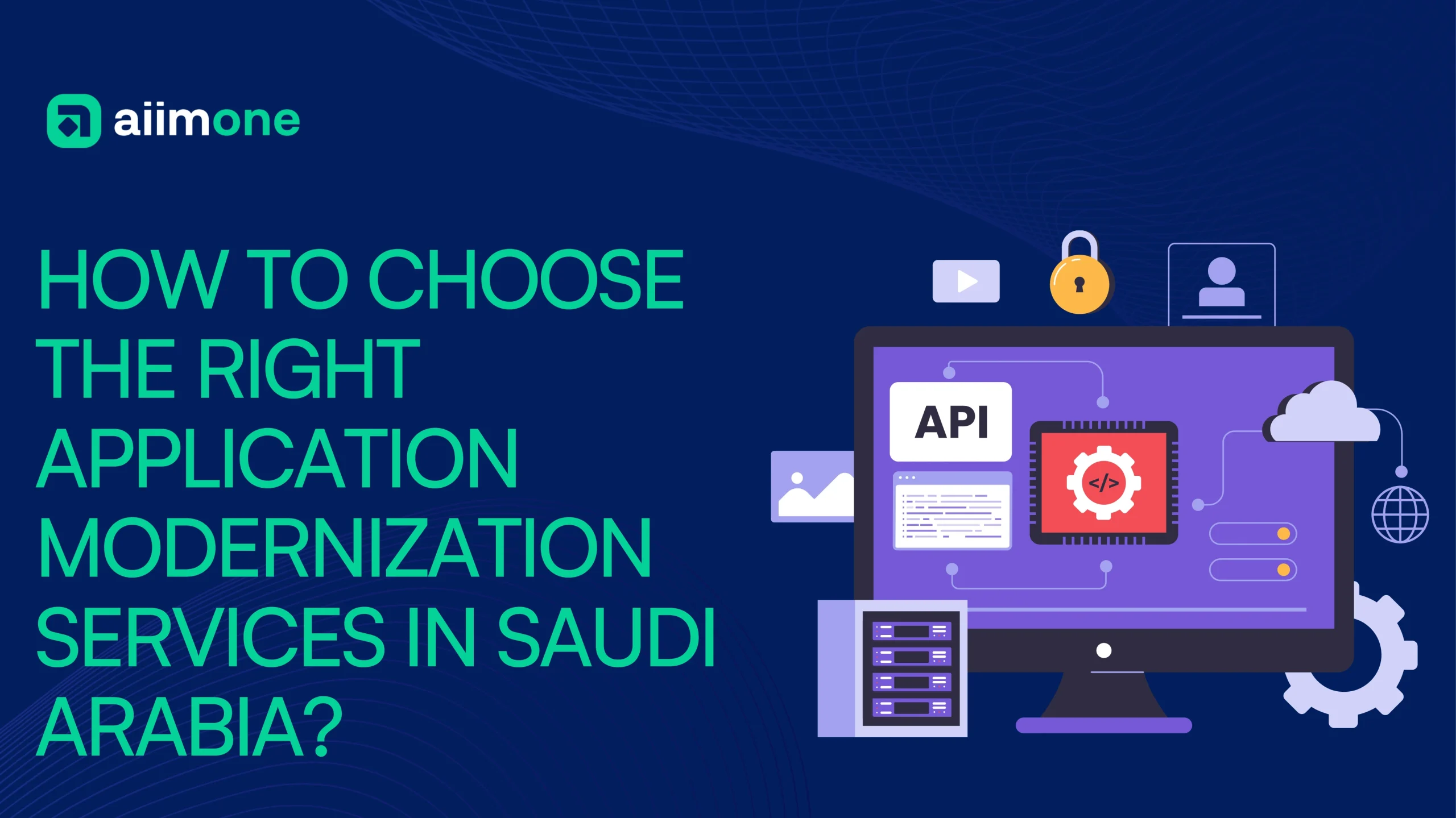
Saudi businesses need faster systems, better service, and lower software costs. Application modernization is now a board-level priority. Vision 2030 is pushing banks, retailers, healthcare groups, and government bodies to run on modern, cloud-ready platforms, and legacy systems can’t keep up.
Choosing the right partner is difficult. There are too many vendors, tools, and choices. This guide covers application modernization services, provider selection, costs, and key questions.
What Are Application Modernization Services?
Application modernization services help you update older software, so it runs on modern infrastructure, uses current programming languages, and connects easily with new tools. Think of it as upgrading the existing system instead of rebuilding it. You keep what still works, replace what doesn’t, and add new features that your customers actually want.
These services usually cover:
- Legacy system upgrades and code improvements.
- Application migration services to public or private cloud
- Modifying solid systems into microservices.
- API enablement so old systems talk to new ones
- Digital application transformation, which includes design
- A good provider handles everything under one roof.
Why Saudi Businesses Can’t Delay Any Longer?
IDC forecasts regional digital spending above USD 74 billion by 2026. Saudi Arabia leads, driven by banking, energy, and public sector growth.
Gartner reports that up to 70% of IT budgets go to legacy maintenance. That is money you can’t spend on customers, products, or growth.
For KSA-based firms, the pressure is even higher. SAMA and SDAIA rules favor modern, secure systems. Saudi Arabia’s cashless push also requires cloud-ready technology. Old software makes compliance harder and slower.
Signs You Need Legacy Application Modernization
These signs often indicate that modernization is needed:
- System crashes under peak load.
- Small changes take weeks due to fragile code.
- Vendor support ends, leaving security gaps.
- You can’t integrate with modern payment gateways, ERP, or AI tools.
- Your best engineers refuse to work on it because the tech is dated.
If several signs apply, a modernization assessment may be needed.
How to Choose an Application Modernization Service Provider?
Here’s the honest checklist we recommend when you’re comparing vendors. Use it during your first three meetings.
Local understanding, global standards
Your partner should know the Saudi market. This requires Arabic support, PDPL and SAMA knowledge, and government cloud experience. They should also follow ISO 27001 and NIST standards.
Proven experience in your industry
A banking modernization project is nothing like a healthcare one. Ask for case studies in your sector. If they can’t share references, that’s a warning sign.
A clear modernization approach
Good providers won’t push a rebuild-everything plan at the initiation. They assess each app, then choose the suitable modernization approach.
Skilled cloud and DevOps teams
This involves checking AWS, Azure, Google Cloud, and Oracle certifications. You can check how many engineers are actually available.
Transparent pricing
Fixed-price, time-and-materials, and outcome-based models each have trade-offs. A trustworthy vendor will explain all three and recommend what fits your risk appetite.
Post-go-live support
Modernization doesn’t end at launch. You need a partner who stays with you for at least six to twelve months after changeover.
How Much Does Application Modernization Cost?
Cost depends on app size, complexity, data, integrations, and approach.
Here’s a rough range based on what we see across mid-sized enterprises in KSA and the wider GCC.
| Approach | What It Means | Typical Timeline | Cost Range (USD) | Best For |
| Rehost (lift and shift) | Move the app to cloud with no code changes | 2 to 4 months | 30,000 to 120,000 | Quick cloud exit from data centre |
| Replatform | Minor tweaks to use cloud-native services | 4 to 8 months | 80,000 to 300,000 | Cost savings without full rewrite |
| Refactor | Restructure code into microservices | 6 to 12 months | 200,000 to 750,000 | Scalability and long-term agility |
| Rebuild | Write the app from scratch | 9 to 18 months | 350,000 to 1.5M+ | Old tech stack, no vendor support |
| Replace (SaaS) | Retire and switch to a SaaS product | 3 to 9 months | 50,000 to 400,000 (year one) | Non-core apps like HR or CRM |
The Business Case for Enterprise Application Modernization
For larger organisations, the business case matters as much as the technical plan. Boards want to see hard numbers. Here’s a simple ROI view that works well in Saudi enterprises:
Infrastructure savings:
Firms can cut hosting costs by 30% to 50% with cloud native setups.
Developer productivity:
Modern platforms help teams ship features 2 to 5 times faster.
Downtime reduction:
Properly modernized apps see up to 80% fewer outages.
Compliance readiness:
Modern systems simplify PDPL, SAMA, and SDAIA audits.
Most modernization projects pay back within 18 to 24 months.
Top Tips and Tricks on Modernizing Your Apps
If you take nothing else from this article, take these tips. They come from real projects.
Understand your apps before you touch them
You can’t modernize what you don’t measure. Start with an inventory of each app, its owner, cost, and risk. Most enterprises are surprised by what they find. This means that 15 to 25% of apps aren’t really used at all. You can get rid of unused apps before investing in modernization.
Choose the right app provider and approach
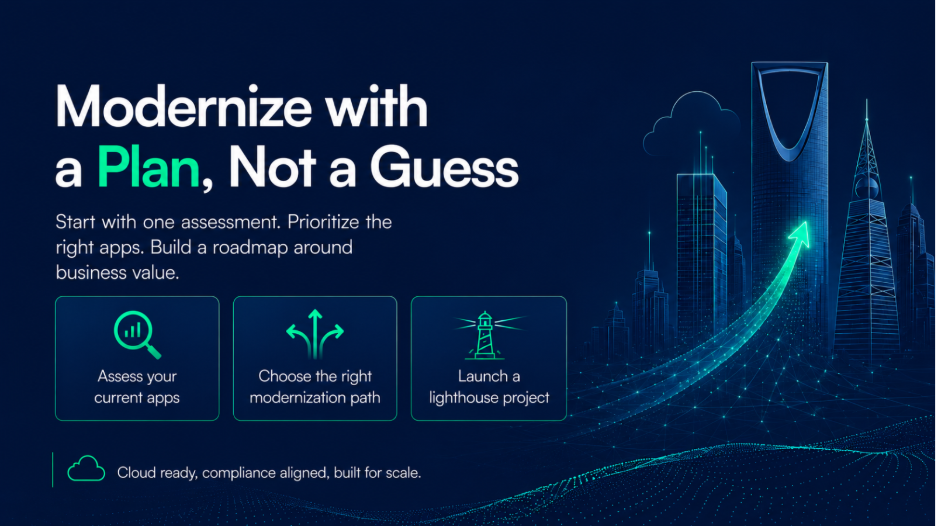
Avoid starting with the most complex system. Pick a mid-size lighthouse project that can show real value in three to six months. Then use the 7 Rs framework to sort every remaining app into a bucket, such as Rehost, Replatform, Refactor, Rebuild, Replace, Retain, or Retire. The appropriate partner will help you decide, and not force a single approach on everything.
Design for the cloud, not just on it
Moving a legacy monolith to the cloud doesn’t fix its core issues. Use managed services for databases, storage, identity, and queues. That’s where cloud actually pays back. Managing cloud systems like traditional infrastructure increases costs and limits benefits.
Bake security in from day one
Build in Zero Trust, encryption, and identity-based access from the start. This is critical in Saudi Arabia, where PDPL, SAMA, and SDAIA rules apply. Late security fixes can cost three to five times more.
Automate your deployments and testing
Manual testing can delay modernization. Invest early in test automation and CI/CD. Set up infrastructure as code before restructuring. Early automation helps teams ship 2 to 5 times faster.
Bring users along and measure everything
Modernization often fails due to people. Test mockups and pilots with real users. You can track deployment speed, recovery, cloud costs, and user satisfaction.
Plan the sunset
Every modernization project needs a clear end date for the old system. Else, you’ll pay to run duplicate systems indefinitely. You can set a clear system retirement date from the start.
Why Application Modernization Consulting Matters?
You can buy tools from anywhere. What’s hard to find is honest advice. Good consulting prevents costly mistakes. It avoids wrong cloud choices, excess complexity, and unnecessary refactoring.
A consulting partner should test assumptions and proven approaches. They should provide a phased roadmap with clear milestones. Aiimone helps Saudi enterprises reduce modernization risks, as it turns IT upgrades into measurable business outcomes.
Common Mistakes to Avoid
Even smart teams stagger. Watch out for these:
- Signing a fixed-price contract before discovery is complete.
- Choosing a vendor purely on the lowest bid.
- Treating modernization as a one-time project instead of a continuous programme.
- Ignoring data quality, such as bad data on a modern platform.
Final Thoughts
The right application modernization services partner can shape long-term success for Saudi businesses. Get it right, and you’ll cut costs, move faster, and stay ahead of Vision 2030 requirements. If you get it wrong, you’ll spend years cleaning up the mess.
Start small, track results, and choose a partner who gives clear advice. Modern applications aren’t just an IT upgrade. They’re the foundation for how your business will compete in the next ten years.